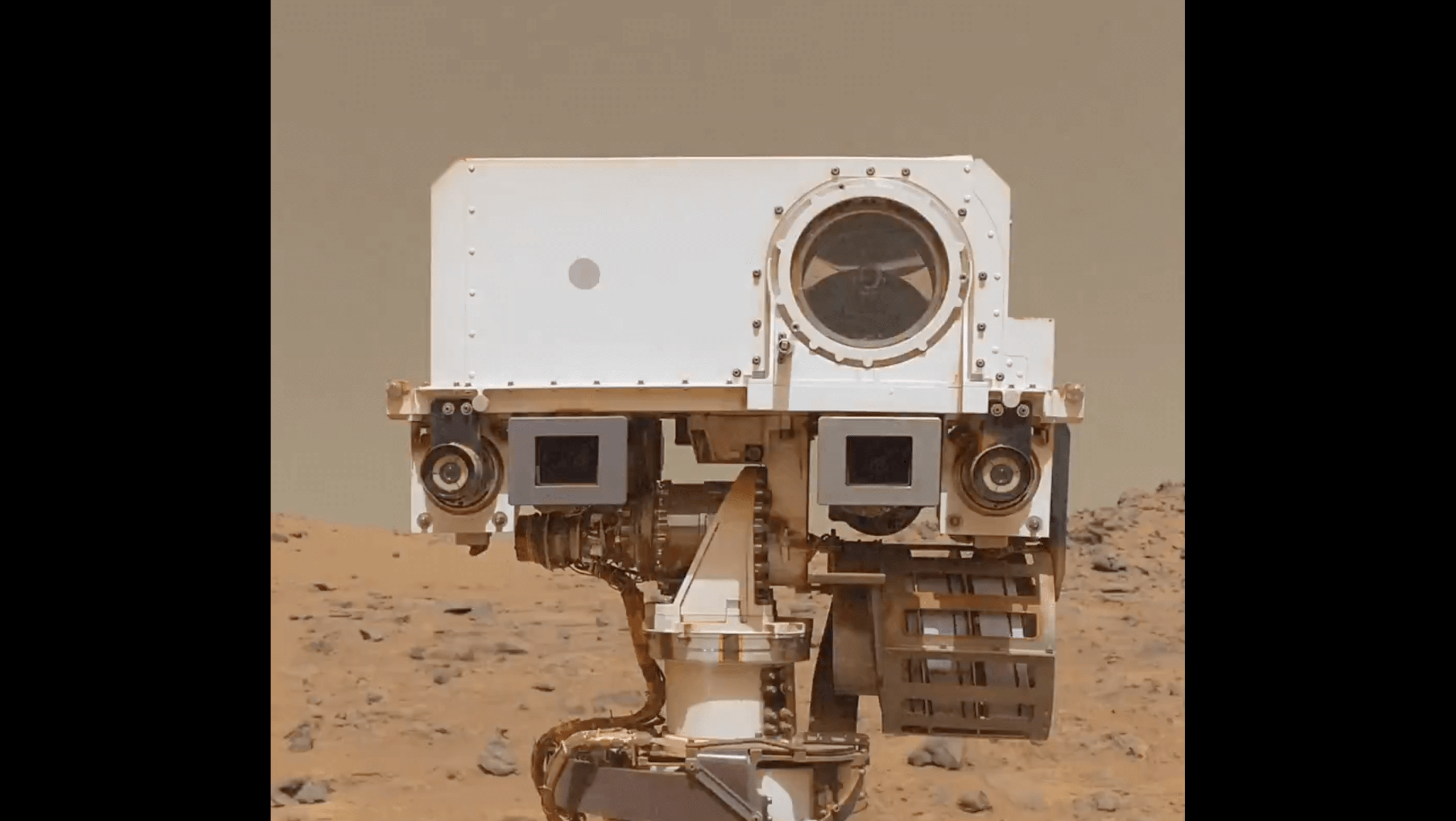
The experiment was Claude’s first attempt at plotting waypoints. Scientists used orbital imagery and terrain data, prompting Claude Code to create a breadcrumb trail for a 2-day drive in December 2025.
Working closely with JPL engineers, the AI assistant planned the routes with minimal mistakes using vision-language models (VLMs). In fact, most of the changes needed were based on information Claude wasn’t given, including ground-level images.
After review, the routes were sent to the Mars rover, and it successfully completed the 400-meter route. While the distance traveled was modest, it shows how generative AI is quickly evolving beyond conversational routines and into shaping real-world decisions.
How Claude Mapped a Route on Mars
Claude didn’t guide Perseverance (NASA’s Mars rover, which has been in operation since 2021) all on its own. Instead, it took data from previous explorations and a workflow designed by NASA engineers.
Rather than calculating waypoints manually, engineers at the Rover Operations Center at the Jet Propulsion Laboratory used Anthropic’s VLMs to map the route. The scientists gave Claude instructions using high-resolution imagery, data from previous drives, and digital elevation models.
Prompts were given, and Claude Code was able to turn the data and images into NASA’s XML-based code, called Rover Markup Language (RML). It used images to plot 10-meter paths, which JPL engineers then checked for errors.
Once the scientists determined that only limited revisions were needed, they finalized the route and sent it to Perseverance via high-powered radio antennas known as the Deep Space Network.
The space rover successfully drove the route on December 8 and December 10, 2025.
On December 8, the Perseverance rover safely trundled across the surface of Mars.
— Anthropic (@AnthropicAI) January 30, 2026
This was the first AI-planned drive on another planet. And it was planned by Claude. pic.twitter.com/kVbdKWibuP
It was a major milestone for both NASA and Anthropic, providing a snapshot of what businesses can do with emerging AI technologies.
Why NASA Is Testing AI Models
NASA’s collaboration with Anthropic AI symbolizes a larger shift in how businesses and government organizations are evaluating AI for cognitive, research-based workflows. Rather than relying primarily on AI-powered tools for content and software development, teams are now testing how generative AI can support real-world decision-making and problem-solving in high-pressure scenarios.
Using Claude AI allowed engineers at NASA to streamline the time-consuming process of mapping out routes for its Mars space rover, Perseverance. The results showed that it still needed human oversight, but it was more efficient.
According to Anthropic, the model was able to produce route plans much faster, with specialists estimating it could cut the time in half when planning future routes.
AI Enters Uncharted Territory
The experiment using Claude to help plan a route for a Mars rover shows how AI optimization can help support high-stakes operations with more accuracy and efficiency.
Stories like this show how advances in vision-language models and automated reasoning continue to shape decision-making and authority across platforms.
To explore how new generative AI tools might influence your brand’s productivity and performance, connect with the team at Avenue Z.
We Drive Influence
Win AI search, grow revenue and build reputation through PR and digital marketing.