In eCommerce, attracting visitors is important, but it’s only one part of the challenge of winning customers.
Once someone visits a website, they immediately look for trust signals. Every design choice, headline, and piece of social proof helps shape how someone interprets your brand and whether they feel ready to move forward with a purchase.
A website is more than a digital storefront. The on-page experience signals how buyers evaluate the product, pricing, and messaging.
With so many factors influencing how customers interact with a site, even small points of friction can make buyers hesitate.
When I evaluate eCommerce websites, I often see the same pattern. A company may have great products and strong visibility, but subtle gaps in the path to purchase can still stall the buying process.
These are some common mistakes brands make on their websites that slow customer momentum.
1. Casting Too Wide a Net
Customers usually arrive at a website with a problem they need solved or a clear idea in mind. The message that got their attention, whether it was a social media ad or an organic search result, sets expectations for what they will find on the page.
When a website tries to be everything to everyone, it can create a congruency gap between the message that brought someone to the site and their actual experience after they arrive.
This disconnect comes down to a simple issue. The brand hasn’t identified who the customer is or why they’re buying the product in the first place. When messaging is designed for a broad audience rather than specific pain points, it makes it harder for visitors to recognize the value they can get from the product.
When brands have a clear understanding of their customers and why they’re buying, they can create a website experience that resonates with their intended audience.
2. Confusing Mobile Navigation
Once customers land on a website, the focus moves from discovery to navigation. Buyers usually do one of two things at this point. They either click the CTA button in the hero section or they open the navigation to begin exploring the shopping journey.
How the navigation appears on mobile devices becomes a huge point of leverage. Mobile navigation needs to reflect decisions across UX/UI design, copywriting, and merchandising that directly influence how customers move through a site.
I frequently see brands fall into two common traps.
- Too many collections: Brands try to highlight every possible way to shop in the top level of navigation. They crowd the menu with too many categories and subcategories, which can overwhelm customers.
- Highlighting what’s important to the business, not the buyer. Pages that focus on the company itself help tell a brand’s story, but they don’t help people evaluate products or move through the buying journey.
Navigation should feel simple and natural, especially on smaller screens where space is limited. People rely on visual cues to interpret what they see, so it’s important to help visitors quickly identify what matters to them and decide what to do next.
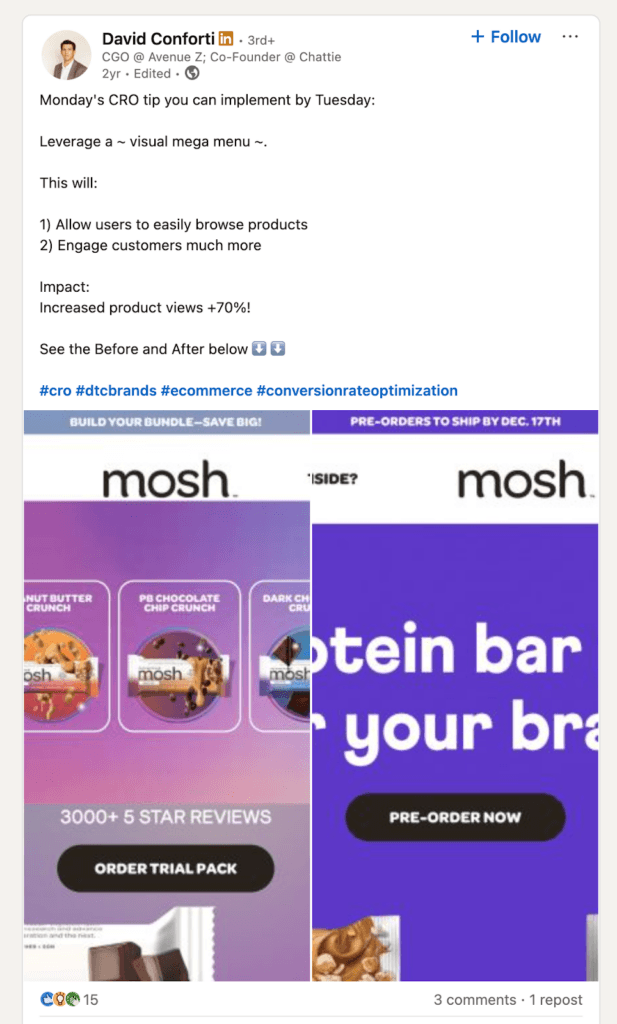
A simple structure tends to perform much better. When buyers immediately understand where they are on a page they can begin browsing faster. Stick with clear entry points, such as:
- Shop All
- Best Sellers
- Learn
- Account
On mobile devices, visual navigation lays a path from entry to checkout. When customers immediately see products and how they relate to their needs, they are much more likely to make a purchase.
Having sections like About Us and Our Partnerships give context to a brand, but they shouldn’t interrupt the path to purchase. I recommend hiding them under a Learn tab so customers can explore them when they choose to, but keeping the main navigation focused on shopping.
3. Not Conveying a Clear Value Proposition
When reviewing eCommerce pages, I frequently see copywriting that ignores customer pain points. Too often, the messaging assumes that visitors already understand why a product is valuable.
In practice, different parts of the website often cater to customers at different parts of the buying process.
Top of Funnel
Traffic coming from platforms like Applovin is often top of funnel. Visitors are still comparing products and gathering information, so it’s important to help them understand the value the product offers. Interactive content like quizzes keeps visitors engaged and allows them to think about how your product fits their needs.
Top or Middle of Funnel
Landing pages serve customers in the top or middle of the funnel. These pages usually have the best results when the messaging states a specific use case and explains the problem a product solves.
Bottom of Funnel
Homepages tend to attract visitors who are further along in the buying journey. The customer likely arrived on their own by searching for your product or brand, so the messaging should be clear and doesn’t need to be overly complex.
Brands need to explain their value proposition clearly, highlighting what makes the product unique and why it’s the best choice in a crowded market. Generic headlines or vague product descriptions can leave visitors searching for reasons why the product makes sense for them.
The best eCommerce websites put the value of their product or brand at the center of the discussion. When brands make a clear connection between a customer’s problem and how their product can solve it, they can move visitors toward a purchase. This starts with a strong brand narrative.
4. Underutilizing Product Image Galleries
Many ecommerce websites aren’t using product image galleries to their advantage. On mobile, customers may not scroll past the fold, so we need to leverage all of our surface area to drive people through the buying journey.
Instead, I see a lot of brands featuring images that look similar (or even identical). Every frame should not only be original but also contribute meaningfully to the narrative. For example, solo shots of the product on a white background do not help further the customer experience.
The best product pages use each image to guide customers through the buying path. Every slide should answer questions such as what the product does, how it can be used, why it’s the right solution for the visitor, and what results they should expect.
5. Weak Social Proof
A website is where customers come to explore your products, but they can’t evaluate them the same way they can in a store. Social proof becomes very important because it helps people decide if the product is a good fit.
Reviews and accounts of other customer experiences can fill that gap. When customers search through reviews, they are looking for stories that are similar to their own. If they find an account of someone who had a similar pain point, it can help make a product feel relevant and validate their choice to move forward.
When brands showcase social proof, what they choose to highlight depends on the type of product. Customers look to answer different questions, depending on what they are buying.
- Supplements: Is it safe? Does it work? What results have other customers seen?
- Fashion or apparel: Does it fit? Is the quality good? What body type does it look best on?
- Beauty: Does it match my skin tone? What are the ingredients? Will this cause breakouts or other side effects?
I see a lot of eCommerce companies that include reviews on their websites, but many aren’t specific enough, and some are outdated. Reviews should highlight success stories and be tied to specific use cases, making it easier for a visitor to see how the product could work for them.
In a recent interview with Okendo, I noted that UGC and reviews are among the most important drivers of online conversions. When websites use weak social proof, they miss opportunities to help buyers understand how their product can benefit them.
Creating Digital Experiences That Convert
eCommerce companies don’t develop successful websites overnight. Strong digital experiences are built by understanding customer psychology, earning trust, and guiding visitors through the buying process.
Data helps brands understand where friction occurs, while messaging supports informed decision-making.
Our approach to Conversion Rate Optimization (CRO) at Avenue Z is both human-first and AI-first at the same time.
We leverage deep experience in copywriting, order structure, and customer psychology to build frameworks that convert. AI allows us to streamline ideation, design, development, and performance analysis.
By combining human insight with the latest technology, we help brands build digital experiences that keep customers moving forward without losing momentum.
We Drive Influence
Win AI search, grow revenue and build reputation through PR and digital marketing.