Marketing strategies look different from brand to brand. But understanding how people make decisions is what I highlight when structuring CRO.
In ecommerce, outcomes are shaped by multiple factors that need to work as an ecosystem rather than as standalone parts.
Businesses build momentum when they don’t think of CRO as a self-contained project, but an opportunity to learn how customers think and respond.
Conversion Rate Optimization (CRO) works when visual storytelling guides how customers engage with a website. It structures how people evaluate information and decide on a purchase through a beautiful, multifaceted blend of copywriting, data analysis, and pricing strategy.
Table of Contents
How to Structure CRO for Sales
Map the Buying Path to Audience Intent
Different people arrive at your site for different reasons. Some click through an ad, others may find you after reading a blog.
How someone enters your site is a valuable clue for framing what they see.
High intent buyers may want to see pricing or benefits right away. Top of funnel customers discovering your product for the first time need education & may want to read use cases.
This doesn’t mean you have to change your strategy. It does mean thinking about what pages to show first, depending on where they are in their customer journey. Delivering a message that connects with specific audiences is key to a successful brand strategy.
The Conversion Blueprint: How Avenue Z Designs the Path from Click to Customer
In today’s digital economy, visibility is the starting point. Growth comes from structuring the buying journey.
At Avenue Z, we view Conversion Rate Optimization (CRO) as a rigorous, data-driven discipline that aligns a brand’s digital experience with how people process information, evaluate options, and ultimately decide to buy.
Many agencies see a website as a set of buttons and banners. We look for moments where uncertainty stalls progress.
Our strategy starts with a simple realization: there is no universal “user.” There are only journeys, and winning requires recognizing that paid and organic journeys begin from different mindsets.
The Paid Acquisition Funnel: The Science of Congruency
When someone sees an ad on Meta, TikTok, or YouTube, they are drawn in by a specific signal.
That moment creates an expectation.
If the page they reach doesn’t reflect what brought them there in the first place, the click loses momentum, and it becomes a fast track to burning a budget.
The Meta Ad Library Audit
Our work begins before the landing page. We begin in the Meta Ad Library.
This goes beyond what looks good on the surface. It’s an audit of what draws someone in, the mindset it connects with, and how it comes across.
We look at:
The Hook: Identify the emotional or logical catalyst prompting the click.
The Persona: Examine the level of awareness the message is resonating with. Are you responding to someone actively searching for a solution or someone recognizing a problem?
The Presentation: Evaluate whether the ad feels polished and produced or native and familiar.
Solving the “Congruency Gap”
Once someone lands on your page, the first few interactions determine what happens next.
The biggest drop-off point in any funnel is the Congruency Gap.
It becomes noticeable when a customer clicks an ad promising relief from back pain, but lands on a welcome page. The message that drove them to click is no longer visible. When that happens, momentum slows and bounce rates rise.
A landing page needs to mirror the promise of the ad. Benefits should be clearly shown at the top, and pain points need to be answered immediately.
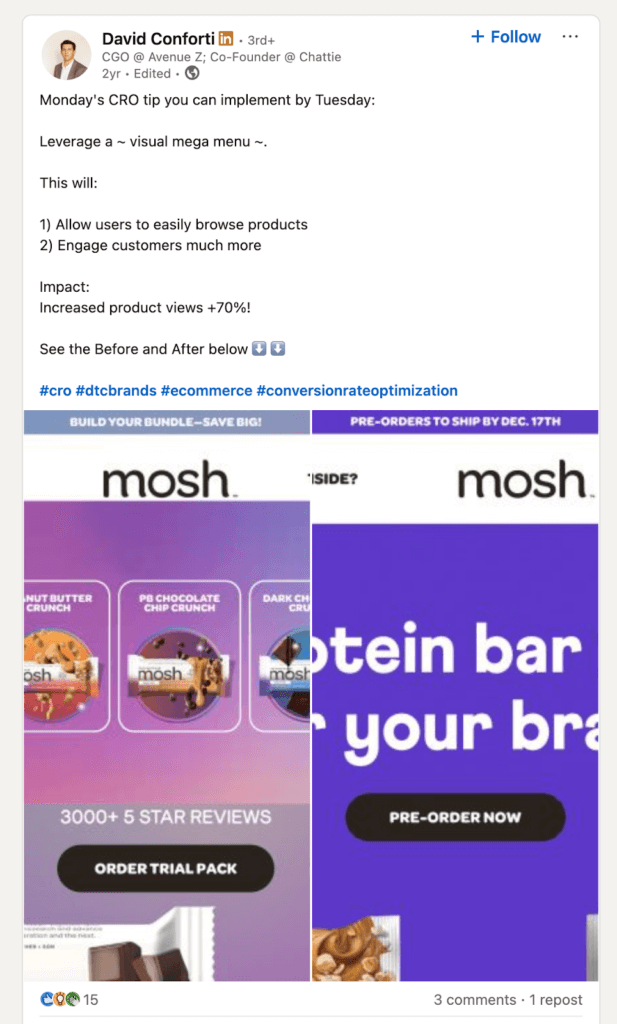
This means structuring landing pages around different purchase motivations. We tailor landing pages to 3 to 10 personas, each with distinct questions, objections, and outcomes.
The Metrics of Intent
The final sale is only one part of the picture. You can learn far more from what happens after the click.
Data shows where friction is happening.
Bounce Rate Benchmarks:
Bounce rate is an early indicator that the journey is breaking down. We typically have a target of under 50% for paid traffic. If more than half of your visitors leave immediately, your alignment between the ad and landing page is most likely off.
Segmented Performance:
Traffic sources don’t all behave the same way. Direct, organic, and paid social arrive with different mindsets. When one segment underperforms, it doesn’t mean your entire site needs to be changed. Instead, we focus on fixing the bridge between the source and the page.
AOV & Business Model:
Unit economics influence the length and depth of the page. Landing pages should be structured around the purchase economics.
Higher average order value (AOV) items typically require more information to justify purchases. Buyers look for social proof, in-depth explanations, and context before deciding to buy high-cost items.
Lower-cost items are often purchased quickly and with less reflection. The priority should shift to removing friction from the path to checkout.
Competitive Intelligence: Structuring Funnels to Outperform
Funnels don’t operate in a vacuum. Conversion performance only makes sense within a competitive landscape.
Understanding how leading brands structure their funnels can tell you where opportunities exist. Competitive analysis identifies patterns that leading brands use to capture attention, close gaps, and guide buyers toward conversion.
Testing Divergent Funnel Structures
Standard product detail pages (PDPs) usually underperform with cold traffic. Visitors are rarely ready to buy, so the funnel structure needs to reflect that truth.
Instead of sending cold traffic to a traditional product page, we build and test alternative funnel architectures more aligned with entry intent.
The Quiz Funnel
Used when buyers need help choosing between products. A quiz narrows down the options and points them in the right direction.
The Advertorial or Listicle Funnel
Best for audiences who aren’t ready to move to the checkout page. It provides context before positioning the product as the right fit.
The Comparison Funnel
Built for buyers who are evaluating your product against other options. It shows how your product compares to competitors by highlighting differences and proactively answering questions.
The Retargeting Funnel
For returning visitors who have shown buyer intent but didn’t convert. It focuses on social proof and answers the questions that prevent action.
The Organic Discovery Journey: Strengthening the Fundamentals
Organic discovery functions differently from paid acquisition. Visitors arrive through search on Google or AI platforms like ChatGPT, usually without paid advertising.
Visitors aren’t showing up because an ad brought them over. The structure of the site determines if they stay.
Unlocking Structural Leverage
Even established brands overlook fundamental structural issues. As the site evolves, the structure needs to be revisited.
Mobile Navigation Architecture
Product categories should reflect how customers think, not your warehouse inventory. Buyers should be able to discover products intuitively without feeling friction navigating your site.
The Homepage Hero
Rotating banners slow momentum and are often ignored. The hero section should lead with your value proposition or most compelling entry-point offer.
Frictionless UX
From the collection page to the cart, the path should be uncomplicated. No one should be confused about where to click or wait for pages to load.
Building and Testing: Putting Data to Work
Strategies won’t drive results if they stay in a deck. Growth starts when ideas go live on your site.
Prioritization: Focus on changes that can have the highest chance of making a meaningful impact on performance.
Building: When data points to an opportunity, we build landing pages and make structural changes to support it.
Testing: We test variations and measure which version improves performance.
Iteration: When something works, it doesn’t mean it’s a finished product. Gains show us how we can continue to improve.
Refining the Path to Purchase
Buyers compare options, question value, and assess risk before making a purchase. When data guides copywriting and pricing, the path forward becomes much clearer.
At Avenue Z, Conversion Rate Optimization (CRO) isn’t a department. It’s an ongoing philosophy rooted in understanding why someone says no and how to refine the experience so they say yes.
We are the Agency for Influence
Discover new ways to drive revenue and build reputation for your brand.